October is the month most Austin homeowners stop thinking about their sprinkler system. The heat breaks, the lawn looks better, and the water bill starts to come down. From a repair tech’s point of view, that is the exact moment the system needs attention. The run times that kept a St. Augustine lawn alive in August will overwater it by mid-October, the small leaks that started in July are still running, and the first freeze is only about eight weeks away.
This guide lays out the fall maintenance tasks that matter for a Central Texas irrigation system, in the order we recommend doing them, from the first week of October through the first freeze.
Fall Sprinkler Maintenance Timeline
- Early October: Walk every zone, fix summer wear and damage, and check for leaks.
- Mid-October: Cut controller run times as temperatures drop.
- Late October: Check your rain/freeze sensor and flag sprinkler heads before any lawn aeration.
- November: Schedule a winter system service and insulate the backflow device.
- Before the first freeze (about December 1 in central Austin, earlier in the suburbs): Set the winter schedule and know where your shut-off valve is.
What you do not need to do: blow out the system or shut it off for the season. More on that below.
Why Fall Maintenance Matters More in Central Texas Than People Think
Central Texas lawns are warm-season grasses: Bermuda, St. Augustine, and Zoysia. These grasses slow down in fall, start to lose color once the soil temperature drops below 55°F, and go fully dormant after the first hard freeze, which is when the air stays at 28°F or lower long enough to freeze vegetation and form ice in standing water.
That slowdown changes how much water the lawn can use. A system still running a summer schedule in October puts down water the grass cannot take up. The result is runoff, soggy spots, fungus problems like brown patch in St. Augustine, and a water bill that does not drop the way it should.
The equipment side matters just as much. By October, a system has run hundreds of cycles through a Texas summer. Heads have been hit by mowers, plastic has gone brittle in the sun, and valve diaphragms have worn. Because sprinklers run at night, most of that damage goes unnoticed. Fall is the last comfortable window to find and repair worn or vulnerable components before freezing weather turns a weak point into a split pipe or failed fitting.
Early October: Inspect the System and Repair Summer Damage
Run Every Zone and Watch It
Turn on each zone manually from the controller and walk it while it runs. You are looking for:
- Heads that do not pop up, or pop up and stay tilted.
- Broken nozzles or heads that geyser instead of spray.
- Spray hitting the driveway, sidewalk, fence, or house.
- Dry patches or heads blocked by grass, shrubs, or new landscaping.
- Water bubbling up from the ground between heads, which points to a broken lateral line.
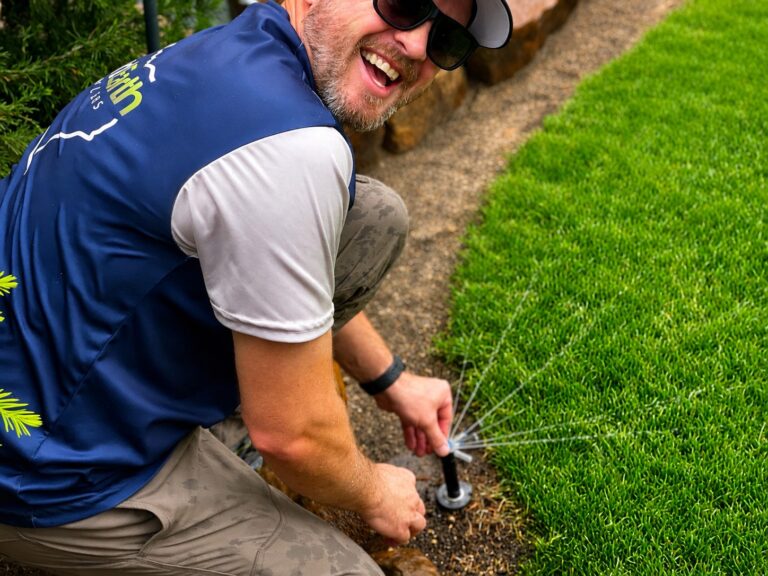
Broken and cracked sprinkler heads are the most common repair we make in late summer and early fall. Most are caused by mower strikes and foot traffic, and most are fast, inexpensive fixes when caught early.
Check for Hidden Leaks
Not every leak is visible. With the system off and no water running in the house, read your water meter, wait an hour or two, and read it again. If the meter moved, there is a leak somewhere. Other signs include a section of lawn that stays wet or unusually green between watering days, a sunken spot in the turf, or a valve box that is always full of water.
A leak as small as small as 1/32 of an inch, the tip of a ballpoint pen, can waste more than 6,000 gallons a month, according to the EPA’s WaterSense program.
Look at the Valves
A valve that does not fully close keeps a zone weeping long after the cycle ends. If you see water running out of the lowest head in a zone hours after watering, or a zone that turns on by itself, the valve diaphragm or solenoid likely needs service. Stuck valves are another one of the most common problems we find after a full summer of cycling.
Mid-October: Adjust the Controller for Cooler Weather
Cut Run Times, Do Not Just Leave Summer Settings
This is the single most important fall task, and the one most often skipped. As nighttime temperatures drop and days get shorter, evaporation slows and the lawn needs less water. As a starting point, most Austin lawns can have their run times reduced by roughly a quarter to a third in mid-October, then reduced again in November. Adjust based on what you see: if water is pooling or running off, cut further.
Water less often as temperatures cool, but apply enough water to reach the root zone. Because Central Texas clay absorbs water slowly, split the total run time for each watering day into two or more shorter cycles with a soak period between them. This “cycle and soak” approach helps water penetrate instead of running off.
Follow Austin’s Watering Rules
Austin Water assigns watering days by address and by the current water use stage. Under the Conservation Stage rules in effect since September 2025, automatic sprinkler systems at homes may run one day per week, between midnight and 10 a.m. or 7 p.m. and midnight, with odd-numbered addresses on Wednesday and even-numbered addresses on Thursday. Cedar Park, Round Rock, Pflugerville, Leander, Hutto, and Taylor each set their own rules, so check with your local water utility.
If You Have a Smart Controller, Confirm It Is Actually Adjusting
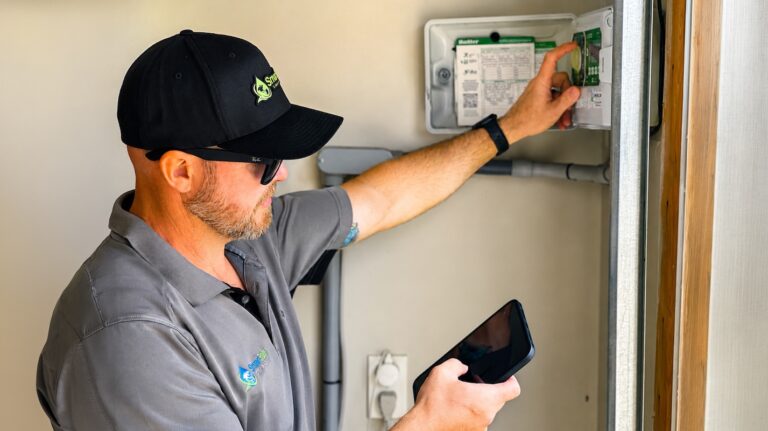
Wi-Fi controllers from Rachio, Hunter, and Rain Bird adjust run times to local weather automatically, which makes fall much easier. That only works if the controller is still online. If your router was replaced or the signal near the garage is weak, the controller may have quietly dropped back to a fixed summer schedule. Open the app and confirm it shows a recent connection and recent weather adjustments.
Late October: Sensors, Coverage, and Aeration
Test the Rain/Freeze Sensor
A rain/freeze sensor shuts the system off during rain and when temperatures drop near freezing. The sensor prevents irrigation during freezing conditions, reducing icing and freeze-related problems. Sensors fail without any sign. Press the test button (or wet a rain sensor by hand) and confirm the controller pauses. If nothing happens, the sensor needs service or replacement before the first cold front.
Fix Coverage Before the Lawn Goes Dormant
Dry spots and uneven coverage are easier to diagnose while the grass is still green and actively growing. Once the lawn goes dormant, everything is brown and coverage problems are hard to see. Late October is a good time to raise and level sunken heads, clean clogged nozzles, and adjust spray patterns.
Flag Your Sprinkler Heads Before Aerating
Fall is a common time for lawn aeration in Austin. Core aerators pull plugs of soil several inches deep and will crack or snap sprinkler heads and shallow lines they run over. Before an aeration crew arrives, mark every head with a small flag, and let them know where your valve boxes are. Walk the system afterward to check for damage.
November: Schedule a Winter System Service
What a Winter System Service Includes
Texas systems do not need the kind of winterization used up north, but they do need to be prepared for freezes. Our Winter System Service includes:
- Checking the backflow device for proper protection and insulating it if it sits above ground.
- Checking the system for freeze-vulnerable points, including exposed pipes.
- Inspecting and adjusting sprinkler heads in preparation for winter.
- Checking for broken heads, broken pipes, and visible leaks.
- Confirming valves are operating properly.
- Programming the controller for the winter season, upon request.
- Providing an estimate for any additional repairs needed.
We recommend a system inspection at least twice a year, about six months apart: once in the summer and once heading into the colder months. The fall and winter visit is the one that protects the system from freeze damage. To get on the schedule before the first cold front, call (512) 694-1147.
Insulate the Backflow Preventer
The backflow preventer is the brass device, usually near the house or water meter, that keeps irrigation water from flowing back into your drinking water supply. In most Austin-area homes it sits above ground, which makes it the part of the system most exposed to freezing. A cracked backflow after a hard freeze is one of the most common winter repair calls we get. Insulating it properly in November can prevent most of that damage.
Handle Drip Zones and Check-Valve Heads
Drip lines and heads with check valves can hold water that has nowhere to drain. For drip zones, open the flush caps or loosen the end caps to let water drain out, then close them again. Loosen the drip filter cap, empty it, clean the screen, and reinstall it. Heads with check valves can be pulled, shaken out, and put back if they are holding water.
Use the Slow Season for Small Projects
If you put off adding a head to cover a dry corner, or moving a head that sprays the driveway, late fall and winter are the right time. Our schedule opens up after the summer rush, and making coverage changes now means the system is ready before spring.
Before the First Freeze: Set the Winter Schedule and Know Where Your Shut-Off is
When Does Austin Get Its First Freeze?
Based on 1991 to 2020 climate data reported by KXAN, the average first freeze at Camp Mabry in central Austin is December 1. Suburbs outside the urban core, including Leander, Cedar Park, Hutto, and Taylor, often see their first freeze earlier. Early freezes happen: in 2019, Austin’s first freeze came on November 1. Treat mid-November as your deadline to have freeze prep done.
Do Not Turn the System Off for the Winter
This is the most common fall mistake we see. Even dormant grass has roots that need some water, roughly every other week during dry stretches. Occasional natural rainfall may provide enough moisture but then your system will not turn on. Just as important, the system itself needs to run. The seals in sprinkler heads and the diaphragms in valves are kept lubricated by water, and running the system regularly flushes out sand and sediment. If you turn the system off and drain the lines in anticipation of a freeze, the water is no longer sitting in the lines.
Leaving a sprinkler system off all winter is like parking a car for six months. It is almost guaranteed to need work when you start it again. Seals dry out, and valve diaphragms get stuck open. Even if you choose not to water the lawn, the system should run for a minute or two per zone at least once a month.
When You Should Shut the Water Off
The only time we recommend shutting water to the sprinklers completely is during an extreme, prolonged freeze. The reason is practical: if a pipe does freeze and burst, you do not want it leaking for days before it can be repaired. Know where your irrigation shut-off valve is before winter, not during an ice storm.
One caution: shutting the water off at the backflow device can trap water inside it with no room to expand. Use the irrigation shutoff valve before the backflow device, when your system is configured that way, and make sure the backflow is insulated.
What NOT to Do This Fall
- Do not have your system blown out with compressed air. Sprinkler blowouts are not done in Austin. Our climate does not require it, and there is no proper air connection on these systems that meets TCEQ approval for high-pressure air.
- Do not leave summer run times in place through October.
- Do not turn the system off for the season and forget about it.
- Do not ignore a zone that will not turn on. A cut wire or failed valve is easier to find and fix now than in spring.
- Do not let an aeration crew work without flagging your heads.
Fall Is Also the Time to Upgrade for Efficiency
Sprinkler technology has changed a lot in the last decade, and a few upgrades can lower your water bill and improve coverage without replacing the system:
- Wi-Fi smart controllers that adjust run times to local weather.
- Rain/freeze sensors that stop watering during rain and cold snaps.
- Matched precipitation rotary nozzles that put down water more evenly and slowly, which reduces runoff on clay soils.
- Converting shrub beds and narrow strips to drip irrigation.
Making these changes in the fall means they are working before next summer’s heat.
Fall Sprinkler Maintenance Checklist
- Run every zone and fix broken heads, nozzles, and leaks.
- Read the water meter with everything off to check for hidden leaks.
- Watch for valves that weep or zones that turn on by themselves.
- Reduce controller run times in mid-October, then again in November.
- Confirm your smart controller is online and adjusting.
- Test the rain/freeze sensor.
- Level sunken heads and fix coverage while the grass is still green.
- Flag heads before aeration.
- Schedule a Winter System Service in November.
- Insulate the backflow preventer.
- Drain drip zones and clean the drip filter.
- Locate your irrigation shut-off valve.
- Keep the system running at least briefly each month through winter.
Need help with any item on this list? Call Smart Earth Sprinklers at (512) 694-1147.
Fall Sprinkler Service in Austin and Surrounding Areas
Smart Earth Sprinklers provides sprinkler repair, system inspections, and Winter System Service for homeowners in Austin, Cedar Park, Pflugerville, Round Rock, Leander, Hutto, and Taylor. Our licensed technicians handle leak repair, sprinkler head replacement, valve locating and replacement, controller programming and Wi-Fi controller installation, cut wire repair, and backflow testing and repair. We also have certified backflow testers on staff for cities that require testing.
If your system has not been checked since spring, now is the time. Call Smart Earth Sprinklers at (512) 694-1147 to schedule a fall inspection or Winter System Service before the first freeze.
Frequently Asked Questions
When should I start fall sprinkler maintenance in Austin?
Start in early October. That gives you time to repair summer damage, adjust the controller as temperatures drop, and complete freeze prep before mid-November. Austin’s average first freeze is around December 1, but suburban areas and early cold fronts can bring freezes weeks sooner.
How much should I water my lawn in the fall in Austin?
Less than in summer. Warm-season grasses like St. Augustine, Bermuda, and Zoysia slow their growth in fall, so reduce run times in mid-October and again in November. Water less often, and use cycle-and-soak programming on clay soil so each watering can penetrate without running off, and follow your city’s assigned watering day.
Do I need to winterize my sprinkler system in Texas?
Not the way northern systems are winterized. Texas systems are not blown out with compressed air. Instead, they need a winter system service that insulates the backflow device, checks for freeze-vulnerable points, and sets a reduced winter watering schedule. Drain the system when freezing temperatures are predicted.
Should I turn off my sprinklers in the winter?
No. Turning the system off for months dries out seals and can cause valve diaphragms to stick. Reduce run times instead, and run each zone at least briefly once a month. Only shut the water off completely during an extreme, prolonged freeze. Also, grass does need some moisture, although much less than during the summer.
Should I run my sprinklers during a freeze?
No. Running sprinklers in freezing temperatures can ice over walkways and driveways and stress plants. A working rain/freeze sensor will stop the system automatically when temperatures drop near freezing.
What part of a sprinkler system is most likely to freeze in Austin?
The backflow preventer. It usually sits above ground and is exposed to cold air. Insulating it before the first freeze prevents most of the freeze damage we repair each winter.
Can I aerate my lawn without damaging my sprinkler system?
Yes, if you flag every sprinkler head and point out valve box locations before the aeration crew starts. Core aerators can crack heads and shallow lines they run over. Walk the system afterward to check for damage.