By late summer, Austin sprinkler systems have spent months dealing with high temperatures, dry soil, mowing and lawn traffic, and the repeated pressure changes that come with every watering cycle. By August and September, small problems that were easy to miss earlier in the season often become much easier to see.
Austin’s watering schedule also means an automatic residential system may have only one scheduled watering day each week. Round Rock permits two days per week. A broken head, weak zone, or leaking valve can therefore affect a large share of the lawn’s weekly irrigation before the problem is noticed. The sprinkler system must be working well in order to do its job when limited by watering restrictions.
Why Late Summer is the Peak Season for Sprinkler Repairs
Central Texas lawns are almost entirely warm-season grass: Bermuda, St. Augustine, and Zoysia. Those grasses stay green and growing all summer, which means the irrigation system supporting them runs on a tight schedule from Spring through to the late summer months.
Heat adds its own wear. Plastic sprinkler heads and PVC fittings spend the summer baking in full sun, and UV exposure makes plastic more brittle by the end of the season than it was in June. Rubber diaphragms inside valves and backflow devices go through the same cycle of heat and constant water pressure. None of this shows up as a dramatic failure early on. It shows up in September, when the small cracks, the worn seals, and the loose fittings finally give out.
Mowing and lawn traffic are the other half of the story. Sprinkler heads run at night, so damage from a mower blade or a foot catching a riser often goes unnoticed for weeks. By late summer, a system can be carrying several of these small injuries at once, all waiting to be found during an inspection.
The Repairs We See the Least (But Still See)
These are not the calls that fill up a technician’s week, but they happen often enough in August and September that they are worth knowing about.
Fire Ants and Critters in the Valve Box
Central Texas fire ants build mounds anywhere there is a warm, moist void, and a valve box is exactly that. A mound built around a solenoid or wire connection can push a valve open, keep it from sealing, or corrode a connection over time. Armadillos are a separate but related problem. They root through soft, well-watered lawns hunting grubs, especially after a late-summer rain, and in the process they can knock a head loose or expose a buried lateral line.
Cut or Chewed Control Wires
A zone that will not turn on, and shows no leak or blown fuse at the controller, often traces back to a broken wire somewhere between the controller and the valve. We find these caused by a fence post dug in the wrong spot, a tree planted mid-summer, or rodents chewing through insulation in a valve box. Locating the break means tracing the wire path with a signal locator, since the point of failure is rarely visible from the surface.
A Wi-Fi Controller That Stopped Adjusting Itself
Smart controllers from brands like Rachio, Hunter, and Rain Bird are built to pull local weather data and adjust run times automatically. When a home’s Wi-Fi signal drops out near the garage, or a router gets replaced without reconnecting the controller, the system quietly falls back to a fixed schedule. Nobody notices until the water bill arrives or the lawn shows stress in spots that should have been getting extra water during a hot stretch.
A Backflow Preventer That Fails Testing
Backflow devices protect the drinking water supply by keeping irrigation water from siphoning backward into the house. Austin does not require annual backflow testing for standard residential systems, but several surrounding cities do. Round Rock requires testing every seven years for standard devices and every year for high-hazard installations. A device that has been sitting in full sun for years is a common one to fail when it finally gets tested, since UV exposure and constant pressure both take a toll on the internal seals.
The Sprinkler Repairs That Climb as Fall Gets Closer
These start showing up more often in the back half of summer and become routine by early fall.
Valves That Stick or Won’t Fully Close
A valve opens and closes electronically, but the actual on/off function depends on a rubber diaphragm. After a full summer of cycling, that diaphragm can wear, warp, or get lodged open by grit that made it past the filter screen. A valve that will not fully close keeps a zone weeping water long after the cycle ends, which is a quiet but steady source of waste.
Uneven Coverage and Dry Spots
Heads settle, nozzles wear unevenly, and shrubs or turf grow into the spray pattern over a season. By late summer, most systems have at least one zone with a dry patch on one side and standing water on the other. This is one of the most common items we adjust during a system inspection, and it is also one of the easiest to prevent with a mid-season check.
Low Pressure in One or Two Zones
A drop in pressure isolated to a single zone usually points to a partial clog, a small leak upstream in that zone’s line, or a valve that is not opening fully. It is a smaller repair than a full leak, but it is one homeowners often live with for weeks before calling, since the symptoms (a weaker spray, a dry corner of the yard) are easy to write off as normal.
The Repairs We See by the End of Summer
Broken and Cracked Sprinkler Heads
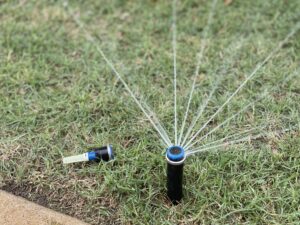
This is the single most common repair call we take from July through September. Mower strikes, foot traffic, and UV-brittle plastic combine to crack heads, snap risers, and knock nozzles loose across nearly every yard we visit. A broken head is also the easiest leak to spot, since it usually shows up as a small geyser or a puddle that will not drain.
Leaks at Heads, Pipes, and Valves
Leaks that started as a minor drip in June are often full leaks by September, since a small crack under constant pressure only gets worse. A leak the width of a pencil lead can waste hundreds to a few thousand gallons of water in a single month, according to water-efficiency data published by the EPA’s WaterSense program. On a system running nightly through a Central Texas summer, that kind of leak can go unnoticed on the ground but shows up clearly on a water bill.
Controller Reprogramming for Shorter Days
Not every fall call is a repair. As daylight hours shorten and soil temperatures start to drop, run times that were correct in July start overwatering by September. Warm-season grass in Central Texas begins to lose color once soil temperature drops below 55°F and goes fully dormant after the first hard freeze, so this is also the point in the season where we start resetting schedules ahead of the cooler months rather than waiting for the lawn to show stress.
When to Call a Licensed Irrigation Tech in Austin
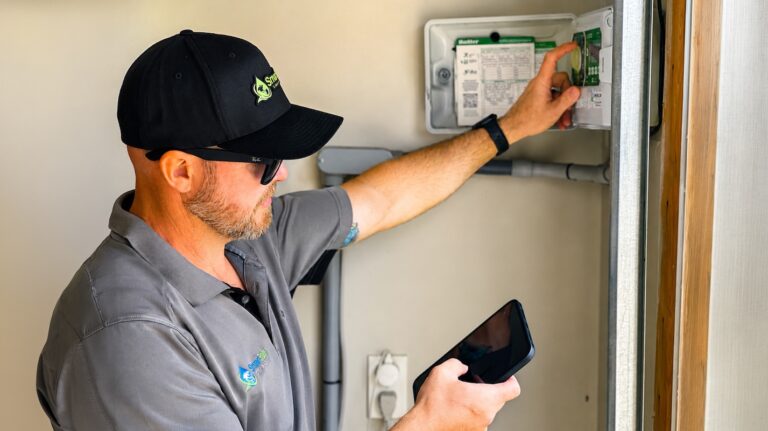
A full system inspection covers the diagnostic work described above: checking every zone for broken heads, pipes, and leaks, confirming valves are operating correctly, and adjusting the controller for the season ahead. It is also the point where a tech can catch the less obvious issues, like a wire break, a valve that is not fully closing, or a backflow device that is due for testing under a city’s rules. Catching these before the first freeze means fewer surprises when it is time for a winter system service, since Central Texas systems should not be shut off completely during the cooler months, only adjusted and protected at the freeze-vulnerable points.
Smart Earth Sprinklers can evaluate your current system and help you prioritize improvements for better coverage, easier operation, and more efficient watering.
Schedule a sprinkler system inspection today, call Smart Earth Sprinklers at (512) 694-1147.
Frequently Asked Questions
What is the most common sprinkler repair in Austin?
Broken or cracked sprinkler heads are the most common repair from midsummer through early fall, usually caused by mower damage, foot traffic, or UV-brittle plastic.
How do I know if my sprinkler system has a leak?
Watch for a section of lawn that stays wet or unusually green between cycles, a hissing or bubbling sound near a valve box, or a water bill that climbs without a change in your watering schedule. Checking the water meter while the system is off is the most reliable way to confirm a leak.
Do sprinkler systems need to be blown out for winter in Texas?
No. Central Texas systems are not blown out with compressed air the way systems are in colder climates. Instead, they need a winter system service that checks for freeze-vulnerable points, insulates the backflow device, and adjusts (rather than shuts off) the watering schedule.
How often should an Austin sprinkler system be inspected?
Twice a year is standard: once in early summer and once heading into winter, spaced roughly six months apart. Regular inspections catch small leaks and coverage issues before they turn into larger repairs or a higher water bill.
Does Austin require backflow testing every year?
Austin does not require annual backflow testing for standard residential systems. Several surrounding cities have their own rules. Round Rock, for example, requires testing every seven years for standard devices and every year for high-hazard devices.
Smart Earth Sprinklers can evaluate your current system and help you prioritize improvements for better coverage, easier operation, and more efficient watering.
Schedule a sprinkler system inspection today, call Smart Earth Sprinklers at (512) 694-1147 or visit us online.