If your sprinklers still turn on during a rainstorm, something is not working the way it should. This is one of the more common sprinkler repair issues homeowners run into, especially when their system is on an automatic schedule.
The good news is that the cause is usually simple. In many cases, the system either does not have a working rain sensor, or the existing sensor has failed.
At Smart Earth Sprinklers, we help homeowners in Austin and the surrounding areas diagnose these issues, repair sprinkler systems, and make sure irrigation systems are not wasting water when the lawn does not need it.
What Does a Rain Sensor Do?
A rain sensor is a small device that tells your sprinkler controller to skip watering when enough rain has fallen. It is usually mounted somewhere exposed to the weather, such as:
- Near the roofline
- On a fence post
- Attached to a gutter
- Along an eave or exterior wall
When the sensor detects rainfall, it interrupts the signal between the controller and the sprinkler system. Instead of running the scheduled watering cycle, the system waits until conditions dry out.
If your sprinklers are running during rain, one of two things is usually happening:
- The rain sensor is not working
- Your irrigation system does not have an active rain sensor installed
Can a Rain Sensor Save Money?
Yes. A working rain sensor can help reduce unnecessary watering and lower water waste.
Every time your sprinkler system runs after or during a storm, you are paying for water your yard does not need. In Central Texas, where water bills can climb quickly during the warmer months, even a few unnecessary watering cycles can add up.
A rain sensor helps prevent that automatically. You do not have to remember to shut off the system manually, adjust your schedule, or guess whether the lawn needs more water.
It also helps protect your lawn. Overwatering can stress turf, encourage shallow root growth, and contribute to fungal issues, especially with common Central Texas grasses like Bermuda, St. Augustine, and Zoysia.
Why Rain Sensors Stop Working
Rain sensors are installed outdoors, so they deal with heat, sun, wind, rain, and general wear year-round. Over time, parts can fail.
The two most common issues are the sensing component and the wiring.
The Sensor Disc Can Wear Out
Many rain sensors use a small disc that expands when it gets wet. When it expands, it triggers the shutoff and tells the controller not to water.
Over time, especially through hot Austin summers, this disc can harden, crack, shrink, or stop reacting properly to moisture. When that happens, the sensor may no longer recognize that it is raining.
The Wiring Can Become Damaged
Rain sensors are usually wired back to the sprinkler controller. If that wire gets cut, disconnected, corroded, or damaged, the controller may run as if no sensor exists.
This can happen during landscaping, mowing, yard work, or general system aging. During a sprinkler inspection, this is one of the first things we check.
Do You Still Need a Rain Sensor With a Smart Controller?
Smart sprinkler controllers, such as Rachio, are helpful because they can use weather forecasts to adjust watering schedules. However, forecast-based systems are not the same as a physical rain sensor.
A smart controller is working from predicted weather. A rain sensor responds to what is actually happening at your property.
That matters because rain can be uneven across the Austin area. One neighborhood may get a downpour while another stays dry. A storm can also arrive earlier, later, or stronger than predicted.
For the best setup, many homeowners use both:
- A smart controller for weather-based scheduling
- A physical rain sensor for real-time shutoff when rain actually hits the property
Smart Earth Sprinklers installs and services sprinkler controllers from brands like Rain Bird, Hunter, and Rachio. We can also pair compatible systems with rain or freeze sensors for better protection.
How to Tell If Your Sprinkler System Has a Rain Sensor
You may be able to spot your rain sensor by looking around the outside of your home. Look for a small cylindrical or dome-shaped device mounted in an open area where it can collect rain.
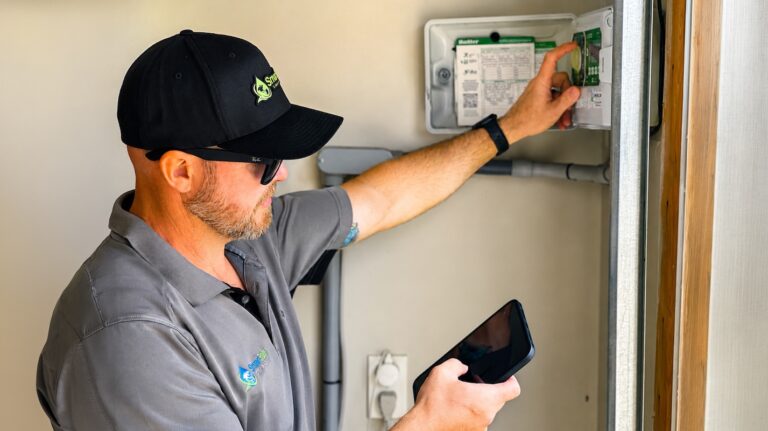
You can also check your controller. Many sprinkler controllers have terminals labeled “SEN” or “SENSOR.” If nothing is connected there, your system may not have an active sensor, even if an old one is still mounted somewhere outside.
If you are not sure, Smart Earth Sprinklers can check during a standard sprinkler system inspection.
Should You Just Turn the System Off When It Rains?
Some homeowners solve the problem by turning the sprinkler controller off during rainy periods. That can work temporarily, but it is not the best long-term solution.
Leaving the system fully off for long periods can cause other problems. Sprinkler head seals can dry out, and valve diaphragms can become stuck. When the system is finally turned back on, you may end up dealing with leaks, stuck zones, or failed sprinkler heads.
A better approach is to keep the system active with adjusted run times and let a working rain sensor handle wet-weather shutoff automatically.
Sprinkler Rain Sensor Repair in Austin and Surrounding Areas
If your sprinklers are running in the rain, Smart Earth Sprinklers can help. We can inspect your existing rain sensor, replace a failed sensor, install a new one, or upgrade your controller if your system is outdated.
We serve homeowners in:
- Austin
- Round Rock
- Cedar Park
- Pflugerville
- Leander
- Hutto
If your sprinkler system is wasting water during rain, schedule a sprinkler inspection with Smart Earth Sprinklers book online or give us a call at (512) 694-1147.