Many homeowners stop watering their lawns when the temperature falls to 60°F., thinking it’s time for the grass to go dormant for the colder months. The lawns then do turn brown, not because they’ve gone dormant for the winter but because they’re actually starved for water.
If you’ve stopped watering your lawn, it will go to “sleep” or into a dormancy state to preserve moisture and nutrients, just as it would during a drought. You need to “wake” it up by starting to irrigate again so your lawn doesn’t die, and you have to replace it.
To make sure the grass is only “sleeping”, do a tug test. Dormant grass blades will hold on with some resistance, taking an effort to uproot them. Dead grass blades will pull out easily because they’ve lost their rooting.
When do Lawns go Dormant for the Winter?
Warm-season lawns start to lose their color when the temperature drops below 55°F, and they go dormant after the first hard freeze (when the air temperature falls to 28°F or lower long enough to freeze vegetation and cause ice formation in standing water). Dormant doesn’t mean dead — it just means the grass has gone into hibernation to protect itself from the seasonal elements. The crowns and roots remain alive, although the blades have turned a brown or tan color.
Fall and Winter Irrigation
Your lawn needs water in the fall and winter to keep the roots healthy for strong growth in the spring. However, grass needs less water in cooler fall weather than in the summer, and even significantly less water in the winter. You can use the “seasonal adjust” feature on your irrigation controller to change the zone run times to a percentage of the programmed schedule set up for the summer months. It will adjust your fall and winter watering times.
Various sensors connected to your controller (e.g., rain and freeze) will also help regulate irrigation by shutting it down when it starts to rain or when freezing temperatures are reached.
When your lawn goes dormant, irrigate once or twice a month. Winter irrigation keeps the grass root cells full of water and acts as an insulator, giving the cells a better chance to withstand freezing temperatures. And moist soil adds even further protection to the roots because it stays warmer than dry soil.

Turning off Your Irrigation
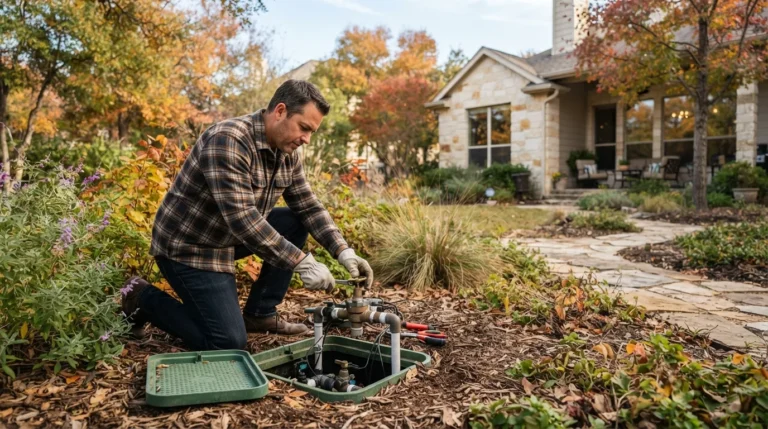
So when should you turn your sprinkler system off? The answer is: during hard freezes. Because our winters in this part of Texas are relatively mild, you can winterize your irrigation system to protect it, and continue irrigating throughout the winter. Some of the system components you want to protect include:
- Valves above ground
- Pipes above ground
- Isolation valve above ground
- Backflow prevention assembly (BPA)
Use foam insulation wrap or fiberglass pipe insulation wrap for these components, and keep the wrap dry with heavy rubber tape. You can add an insulation pouch on top of any above-ground valves and the BPA. For further protection of your BPA, add an insulated enclosure.
When a hard freeze is forecast, turn your irrigation controller to the “off”, “rain”, or “delay watering” setting. With some controllers you’ll have to suspend the zones to get the system to shut down. Shut off water to the system at the isolation valve and drain any above-ground gear-drive rotor sprinklers to prevent freezing and rupturing.

Mowing
As the temperature cools down in the fall, your lawn doesn’t grow as quickly. However, continue to mow it to the proper height for your grass type. The Texas A&M AgriLife Extension Service recommends the following heights for some of the popular Texas warm-season species:
- Zoysia (fine-textured) — 1 to 2 inches
- Zoysia (coarse-textured) — 1 to 2.5 inches
- Bermuda (common) — 1.5 to 3 inches
- Bermuda (hybrid) — 1 to 2.5 inches
- Buffalo — 2 inches
- St. Augustine — 2.5 to 4 inches
It’s recommended as well to keep your grass type closer to the tallest height in its range. And never take more than 1/3 of the height when you mow. For example, if your ideal height is 2 inches, then mow before the grass is more than 3 inches high.
Mowing your grass for the last time before winter depends on when the grass stops growing, and the first freeze. It’s best to do the last cutting after the lawn has gone dormant, and before the first freeze, but this can be difficult to determine. Just be sure not to mow during a freeze, as this can stress and damage the grass to the point where it might not recover.
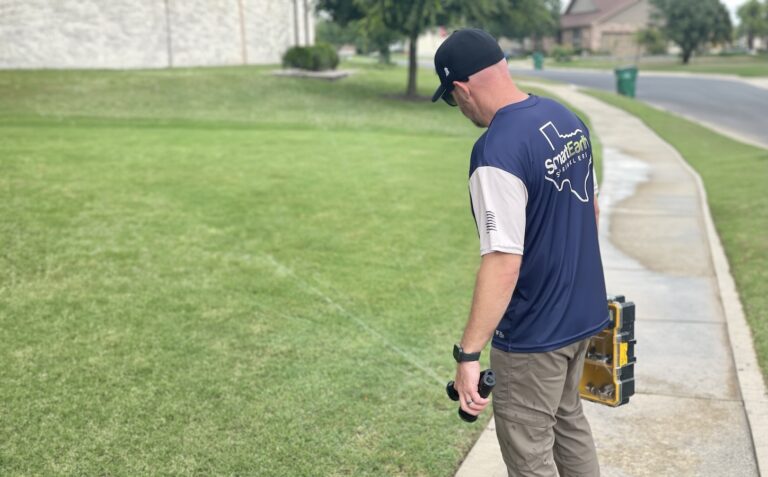
Your sprinkler system is an important investment. Contact Smart Earth Sprinklers for all your inspection, repair, and maintenance requirements.